My Brief Biography

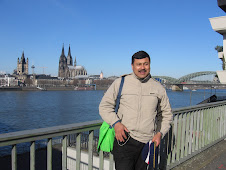
My photo
I am Basan Shrestha from Kathmandu, Nepal. I am a development professional with expertise in socio-economic research, monitoring and documentation. I hold 3 master degrees 1) MSc in Regional and Rural Development Planning, Asian Institute of Technology, Thailand, 2002; 2) MSc in Statistics, Tribhuvan University (TU), Kathmandu, Nepal, 1995; and 3) MA in Sociology, TU, 1997. I have gained professional experience for more than 10 years in socio-economic research, monitoring and documentation on agricultural and natural resource management. I had worked in Lumle Agricultural Research Centre, western Nepal from 1997 to 2000; CARE Nepal (SAGUN Program), mid-western Nepal from 2003 to 2006 and Western Terai Landscape Complex Project in far-western Nepal from 2006 onwards. I have published some articles to my credit. With my sound academic background and professional experience, I am much encouraged to undertake PhD to explore equity in Community Forest Management analysing both procedural and distributional aspects. Your kind cooperation, if any, to link with the concerned personnel and authorities would be instrumental and appreciated.

Friday, March 27, 2009

Differentiating Active and Passive User Groups for Watershed Management in the Western Hills of Nepal

Shrestha, B. (2005). Differentiating active and passive user groups for watershed management in the western hills of Nepal. In Integrated Watershed Management: Studies and Experiences from Asia, ed. by M. Zoebisch, K.M. Cho, S. Hein and R. Mowla: 95-111. Thailand: Asian Institute of Technology.
The status of a user group (active vs. passive) largely depends on how far its members benefit personally and directly from collective action. Unless and until users are convinced of the apparent benefits, they are not going to participate actively in collective action. This issue is very relevant to rural subsistence economies, in which people are compelled to expand farmlands and destroy forest lands to secure food for consumption, fuelwood for domestic energy supply, fodder collection, and for livestock grazing. The situation is further aggravated by scarce off-farm employment opportunities causing seasonal and permanent migration. The types and levels of benefits from collective action depend on a multitude of factors and their inter-relationships. In the case of community plantation, the users accrue forest resources as the direct benefit, besides the communal benefit of land stabilization. Collective action is largely determined by the level of dependence of users on the available resource and accessibility to other sources of forest products to meet their household requirements. The level of dependency also depends on the biophysical suitability of the area in which community plantation is undertaken. Responsible users will consequently conduct regular operation and maintenance of the resources, which will enhance benefits. This situation was applicable to active user groups. For gully and landslide control, users are concerned with the protection of cultivated land from landslides, so they can benefit from reclamation of cultivated land. This will ultimately raise their level of food production and food security in a subsistence rural economy. Thus project intervention for controlling landslides and formation of gullies close to private lands has a significant impact on the users. With the facilitation of training and visits, users can continue their collective efforts when project support finishes.

Tuesday, March 24, 2009

Participatory Well Being Ranking: A Summary of Process and Outcomes

SAGUN (Forestry and Buffer Zone) Program (2005). Participatory Well Being Ranking: A Summary of Process and Outcomes. SAGUN Program, CARE Nepal / RITI / WWF / RIMS Nepal.

This paper briefly summarizes the process of participatory well being ranking (PWBR) conducted to identify the poor households in the community forestry user groups (CFUGs), their support areas and facilitate them in their capacity building and livelihood improvement. It presents the outcomes of PWBR conducted in a total of 591 CFUGs in Banke, Bardia, Kailali, Dhading and Dolpa covered by SAGUN (Forestry and Buffer Zone) Program. Of the total 77,126 user households, 19%, 40% and 41% households belong to well-off, medium and poor categories respectively. In 2005, a total of 327 CFUGs supported poor households with one or more support activities. This paper presents the issues, challenges and lessons learned from PWBR.

Rich Picture Technique: A Tool for Participatory Planning, Monitoring and Evaluation

Orientation on Rich Picture Technique
June 2008

Basan Shrestha
Monitoring and Evaluation Officer
Western Terai Landscape Complex Project (WTLCP)[1]

1. Introduction

The orientation on participatory monitoring and evaluation (M&E) to WTLCP field staffs had been the need of the day to develop their knowledge and skills to practice participatory techniques/tools in project planning, implementation, monitoring and evaluation. Basan Shrestha had attend the three week long Participatory Planning, Monitoring and Evaluation training in The Netherlands, which was organised by Wageningen International from 4 to 22 February 2008. Basan had developed the action plan during the training. Considering its action points to orient the field staffs, the M&E orientation events were organised at WTLCP Field Offices, Dhangadhi and Bardia (Thakurdwara) in far and mid-western Nepal on 23 May and 4 June 2008 respectively. A total of 10 WTLCP field staff participated in two events of M&E orientation facilitated by Basan Shrestha. The participants included Community Motivators, Social Mobilisers and Program Officer.

The main objective of orientation was to increase knowledge and skills of participants on participatory M&E, particularly rich picture technique and information need identification to monitor and evaluate the results of WTLCP. The orientation focused on 1) situation analysis (stakeholders, bio-physical setting, infrastructure, institutions including organisations, legislation and policies, economy, market opportunities and socio-culture; issues and problems); 2) rich picture technique (meaning, steps to draw a rich picture, importance and writing a story about the rich picture); 3) information need identification (performance/ change area assessment criteria-effectiveness, efficiency, impact, relevance and sustainability).

2. Process

Presentation and group work methods were used to orient the participants on rich picture technique and information need identification. Rich picture is a drawing of a situation that illustrates the main elements and relationships that need to be considered in trying to intervene to create some improvement. It has the potential to illustrate the richness and complexity of a situation, by means of symbols, texts and pictures. Rich pictures can be developed in a participatory manner to assess past, present and future situations. In this regard, the participants of Field Office, Dhangadhi selected the case of Shankarpur VDC-1, 2 and 3 in Kanchanpur; and those from Field Office, Bardia selected the case of Guptipur village, ward number 1, Manau VDC, Bardia and prepared rich pictures of the current situation (2008 AD) and future situation/ aspired future (by 2012 AD, the year WTLCP will come to an end) (see Pictures 1 to 4). Besides, they prepared descriptive notes (written stories) elaborating the contents covered by those rich pictures. Specific observations are presented under sub-topics below:

3. Outcome

3.1 Rich Pictures and Notes

Current Situation (2008 AD) of Shankarpur VDC-1, 2 and 3, Kanchanpur

§ Around three hundred households in ward numbers 1, 2 and 3
§ Around 95 households belong to Rana Tharu ethnic group (Janajati)
§ Ram Laxman Community Forest User Group (proposed and registered) covers the forest area of about 3.5 hectares benefiting 178 households
§ Ramban Community Forest User Group (proposed but not registered) covers the forest area of about five hectares benefiting all three hundred households
§ Siddhababa religious forest (proposed) covers an area of four hectares benefiting all three hundred households
§ Four thousand seedlings planted at the rate of two thousand each in Ram Laxman community forest and Siddhababa religious forest with the support of WTLCP in 2007
§ Sarju 52 variety of paddy is widely cultivated in about 80 hectares of land
§ WTLCP/ LI-BRRD has planned to undertake rice varietal trials in 2008
§ 12 poor households have started river bed farming with WTLCP support in 2008
§ WTLCP has supported to establish VDC level Community Forest Coordination Committee Shankarpur Multipurpose Cooperative Limited and Biodiversity Conservation and Development Committee. 450 households in the VDC have become the member of the cooperative. WTLCP is supporting the community through these organisations. The same cooperative is mobilising the revolving fund supported by WTLCP.
§ Communities are receiving agriculture, livestock and forestry services from government line agencies in coordination with these organisations and community groups.
§ Mainly external resource persons are mobilised in capacity building activities such as training, workshops, orientations and tours.

Future Situation / Aspired Future (by 2012 AD) of Shankapur VDC-1, 2 and 3, Kanchanpur

§ Forest density increased (condition improved) with plantation
§ Number of flora and fauna species increased
§ Flood affected area decreased with plantation and width of river decreased
§ Environmental condition improved and supply of forest products increased
§ Biodiversity and economy friendly rice and wheat varieties developed and released
§ Seed production increased
§ Farming of newly developed varieties increased
§ Production increased
§ Number of varieties cultivated
§ River bed farmers cultivated vegetable, NTFP and cash crops in their or leased lands
§ Community income increased from fish farming in ponds and lakes
§ Income increased from off-farm employment opportunities
§ WTLCP support decreased
§ Local institutional capacity increased
§ Local resource materials and resource persons extensively mobilised

Current Situation (2008 AD) of Guptipur, ManauVDC-1, Bardia

§ 105 households in Guptipur, of them 25, 10 and 70 households belong to Dalit, Magar and other caste/ethnic groups.
§ They are the members of Sagarmatha User Group
§ WTLCP has been supporting since 2007. The supports were for irrigation pump, school toilet support and solar lamp (tuki) for 12 households and goat keeping (1 household). WTCLP support the user group and the community through Asaregaudi User Committee
§ This community has one community forest (Deurali Community Forest)
§ Communities have around 28 hectares (42 Bigaha) of Khet (lowland/ irrigated land) and more than 3 hectares of Bari (upland/ unirrigated land)
§ Rice varieties namely IP 22, Masuli, Sabitri and Makawanapur are widely cultivated
§ In terms of organisational development, currently there are one primary school, one user group, one community forest user group

Future Situation/ Aspired Future (by 2012 AD) of Guptipur, ManauVDC-1, Bardia

§ Plantation undertaken in river bed
§ Flood affected areas decreased
§ Number of flora species increased in community forest
§ Number of wild animals increased
§ Electric fencing installed along Geruwa river bed
§ Human and wildlife conflict decreased
§ Crop damage due to wildlife decreased due to cultivation of Mentha
§ Production increased due to adoption of improved technologies
§ Irrigation facilities improved
§ Irrigated area increased
§ Off-season farming increased
§ Income of community increased
§ Participation of women and men increased
§ Communication facilities improved
§ High school established due to organisational development
§ Medical facilities improved
§ Toilets are extensively constructed and used
§ Coordination among different organisations improved
§ Institutional capacity of organisations improved

3.2 Information Need Identification

Different stakeholders would judge differently if the project is performing well. Thus, it is required to involve stakeholders in identifying performance questions (information needs). Five criteria namely effectiveness, efficiency, relevance, impact and sustainability are important to monitor and evaluate that a project is performing well and to ensure that the desired changes are taking place. In this regard, the participants, based on the rich picture of aspired future (2012 AD), identified the change areas and indicators as given in the table below:
Change area
Indicator
Biodiversity conservation
Number of species increased
Number of wild animals increased
Number community forest increased
Number of private forest increased
Deforestation decreased
Forest area increased
Improved livelihoods
Income increased due to vegetable cultivation, seed production and sale of forest products
Production due to improved farming technology increased
Irrigation facility increased
Seed production (area, quantity and variety) increased
Area of off-season vegetable farming increased
Human and wildlife conflict decreased/ minimised
Human and elephant conflict decreased/ minimised due to electric fencing
Number of human death due to human and wildlife conflict decreased
Number of human casualties due to human and wildlife conflict decreased
Health condition improved
Malnutrition decreased
Institutional development
Coordination between community groups and other organisations increased
Capacity developed due to training, workshop, visit and orientation
Self-dependency increased
Community development
Level of educational institutes increased
Communication improved
Health facilities improved

3.3 Participants' Jugement on M&E Orientation

At the end, the participants evaluated the M&E orientation as follows:
Strengths
Areas to be improved
Content
§ The M&E orientation useful to understand and practice M&E, new concepts such as rich picture and its importance
§ This M&E technique/ tool helps review the status of the program and provides guidelines
§ Rich picture helps facilitate in program implementation effectively based on the information about current situation
§ Rich picture about future situation helps in successful implementation of the program, as it foresees the future
§ It helps reveal the importance of documents and project outcomes
§ Knowledge on M&E will help improve proposal writing and activity implementation
§ Too much information is included in the rich pictures - picture will be clear if limited information could be included
§ Will such types of materials be feasible at the field level?

Process
§ Good presentation and facilitation skill
§ Clarity on subject matter (theoritical and practical)
§ Clarifying technique with clear examples considering time, subject matter and participants' views
§ Use of media to orient
§ Clarity on language
§ Practical
§ Increasing the use of photo/ picture and materials could increase the clarity and practice among the participants
§ Would be effective if all staffs have participated in those events
§ Limit discussion on the same topic
§ Orientation time should be long (Sufficient time should be given for orientation)
§ Pre-planning is required
§ Such events should be conducted from time to time
§ Participants have paid less attention

4. Conclusion

The participants remained active to acquire knowledge and skills on participatory M&E techniques and tools. The orientation assured that rich picture development process could be an effective M&E techniques. However, the application of the learning is an important concern to improve the monitoring and evaluation system. Regular follow-up by the concerned authorities and orientation to field staff is required to encourage the participants to practice the learning so that they can effectively contribute to improving the monitoring system for better achievements of project goal and objectives. Staff orientation is an important process, which requires improving the learning and sharing environment.

[1] Ministry of Forests and Soil Conservation has been implementing since January 2006 Western Terai Landscape Complex Project in three districts namely, Kanchanpur, Kailali and Bardia of far and mid-western Nepal, with financial and technical support from United Nations Development Programme (UNDP), Global Environment Facility (GEF), the Netherlands Development Organization (SNV), World Wildlife Fund for Nature Nepal (WWF), Bioversity International, Nepal Agricultural Research Council (NARC) and Local Initiatives for Biodiversity, Research and Development (LI-BIRD).

Case Stories-Conservation, Livelihoods and Development

Construction of a Trench Contributed to Increase Grass, Fodder and Crop Production

Basan Shrestha, Monitoring and Evaluation Officer, WTLCP
Bhola Prasad Chaudhary, Ranger, District Forest Office, Kanchanpur

“Until past one and half years, the plants were heavily destroyed by the open grazing of cattle in the forest patches that we have conserved. The unrestricted movement of people in forest patches had also destroyed saplings. As such, the crops in private lands were damaged, almost to half, due to open grazing. Now, with the construction of the trench along both sides of the community trail, the grasses in community forest have vigorously grown and the crop production in private lands has also increased”, says Shyampati Chaudhary.

The users of Ganga Jamuna Women Community Forest User Group (CFUG) including Shyampati have benefited from the increased production of grass, fodder and crops. The proposed Ganga Jamuna Women CFUG is located in Hanumantole, Amarbasti, ward number 9, Baisebichuwa VDC in Kanchanpur district. It is composed of 92 Chaudhary (Tharu) households benefiting a total of 610 people. The CFUG has been managing 20 hectares of degraded forest patch since the group was formed in October 2004. The formal recognition of the CFUG by District Forest Office (DFO), Kanchanpur is still awaited due to boarder conflict with the proposed Lab Kush CFUG in Raikabarbichuwa VDC in Kanchanpur. Shyampati Chaudhary looks happy with thatch grass and fodder in the community forestThe Western Terai Landscape Building Program (WTLBP), the frontloading support to Western Terai Landscape Complex Project (WTLCP), had provided the financial support of Rs. 9,000 to the CFUG to construct the 900 meter long trench along one side of the community trail close to the community forest and the user group mobilized the labour force. The users, with the technical assistance of the DFO staff, identified the potential site based on the extent of open grazing and proximity of the settlement. Being encouraged with the financial support, the users contributed labour to construct additional 900 meter long trench along other side of the trail close to the private land. As a result, they were able to construct a total of 1,800 meters long trail along both sides of the trail. The whole process required 1,105 person days from 85 households mobilized at the rate of one person from each household, within a period of 13 days in May 2005. 60% of the total labour force included women. According to the market price, the daily wage for women and men were Rs. 80 and Rs. 100 respectively, so that the total cost of construction was estimated at Rs.97,240. Thus, the total amount supported by WTLBP accounted 9% of the total cost and users’ contribution accounted 91%. This excluded the implements arranged by the users themselves to dig the trench.

“Previously, we had to purchase thatch grass and fodder at Rs. 30 per bhari (around 15 kg) from Pachkadiya, which were brought from Dudhuwa National Park in India. But, now these resources are easily available in our CFUG at Rs.10. As a result, both our labour and money have been saved”, says Rampati Chaudhary, the former Treasurer of the CFUG.

The construction of the trench has contributed to control open grazing resulting in natural regeneration of plant species such as Jamun (Eugenia jambolana), Khair (Acacia catachu) and Sisoo (Dalbergia sissoo) and increased production of grass, fodder and crops. The regular maintenance of the trench is an important aspect to consider to further discourage open grazing and movement.
9 October 2006 (23 Ashwin 2063)

Two Villages directly benefited from a Wooden Bridge

Basan Shrestha, Monitoring and Evaluation Officer, WTLCP
Sundar Lal Chaudhary, Local Resource Person, Gola VDC, Bardia

121 households of Banjariya and Syaulibazar villages in ward number 5, Village Development Committee (VDC), Bardia have directly benefited from a wooden bridge constructed over the Tapara canal in Banjariya. ‘Prior to construction of this bridge, it was very difficult for school going children to cross the Tapara canal and their parents, particularly women, who had to carry their children and cross the canal”, says Dharma Chand, Badghar, the village leader who had led the construction of the wooden bridge.

Banjariya Pragati User Group in Banjariya, ward number 5, Pashupatinagar VDC had taken the lead role to construct the wooden bridge. Parks and People Project (PPP) and Participatory conservation Program (PCP), supported by United Nations Development Program (UNDP), had formed the group in 1999 at the settlement level and facilitated to affiliate it to Buffer Zone Management Council (BZMC) in 2003. The group is composed of 65 households, with more than three quarters Chaudhary households. Similarly, Syaulibazar User Group, another beneficiary group in the same ward was also involved in the construction of the bridge. This group, which was formed and leagalized following the same process, is composed of 56 households belonging to Chaudhary and Dalits communities.

The Western Terai Landscape Complex Project (WTLCP) had provided the financial support of Rs. 40,000 to Banjariya Pragati User Group in January 2006 to construct the wooden bridge. Besides, PCP and Brinda User Committee, the VDC level coordination committee, had supported Rs. 8,000 and Rs. 5,000 respectively to the group for the same purpose. With a total of Rs. 53,000 the group managed to saw the timber poles and planks, pay for skilled labours and purchase nails and associated materials to fix the timber poles and planks.

The user groups had received around 520 cubic feet of timber (20 oxen carts) from Bardia National Park and Manau Forest User Group for poles, planks, railing and other types of wooden support to construct the 70 feet long and 12 feet wide wooden bridge. They had collected around 100 oxen carts of stones from Geruwa river to construct barbed wire gabion walls at four foundation corners of the bridge. Men were mainly involved in the collection of timber and stones and women had supported to carry them to the place of construction. Two user groups had mobilized human labour from 121 user households at the rate of one person from one household for 2845 person days at the rate of Rs. 80 per person per day, so that the total cost of human labour was estimated at Rs.227,600. “It was very difficult to cross the canal in Banjariya, which has emanated from Geruwa river, during rainy season due to rise in water level.

Mainly, children from Banjariya studying in Namuna Primary School in Syaulibazar had difficulty to cross the canal. Similalry, students from Syaulibazar had difficulty to cross the canal to attend Pashupati High School in Pathraiya, ward number 8. The bridge construction has eased people’s movement. In addition, it has become very easy to transport grains like rice, wheat, maize and mustard for grinding in the mill located in Pathriya. This canal had many times flown people while crossing…….”, say the users.

The wooden bridge has made easy accessibility of the people. The regular maintenance of such infrastructures is an important aspect to be considered for continued benefits and encouragement to the community initiated development.
19 November 2006 (3 Mangsir 2063)

Trail Improvement Contributed to Community Development[1]

Bhim Bahadur Thapa
Kalikich User Committee
Beldandi VDC, Kanchanpur
[1] This article was edited and translated by Basan Shrestha, Monitoring and Evaluation Officer, WTLCP.

Until past few days, the passers-by going through this community trail used to scold ‘The people of this village are so lazy that they do not even improve their trails.’ In fact, the level of the trail passing through Chauanni village bordering between ward numbers 7 and 8 in Beldandi Village Development Committee (VDC) of Kanchannpur district was about two feet lower than the ground level. Water logging was the main problem even in days with little rain. The passers-by used to put off their shoes and slippers to pass through the trail. In some cases, it caused etching and wounds on the feet. Particularly, the school going children had to attend their classes with soaked bags and dresses. It was usual that the passers-by carrying grains like rice, wheat, maize and mustard for grinding in the mill used to scold the villagers due to soaking and spoilage of their grains.

Considering the poor condition of the trail, Jaya Kalika User Group and Chandan Basti Sisters Group in coordination with Kalikich User Committee in the buffer zone of Suklaphanta Wildlife Reserve in Beldandi VDC, Kanchanpur mobilised the community labor worth of Rs. 9,600 to carry out the earth work to maintain the level of the two kilometre long trail in February 2007. This included 16 persons mobilised for 6 days,
including 81 men days and 15 women days at the rate of Rs. 100 per day for both men and women. Afterwards,
WTLCP in coordination with Buffer Zone Management Committee provided a financial support of Rs. 100,000 for gravelling over the five hundred meter long trail.

Around 1200 households have directed benefited from the trail improvement. It has made easy accessibility of the people contributing to community development. The regular maintenance of such community assets is an important aspect to be considered for continued benefits to the community and encouragement to the community-initiated development.
15 Falgun 2063 (27 February 2007)

Goat Farming: A Potential Source of Cash Income

Basan Shrestha, Monitoring and Evaluation Officer, WTLCP
Bhola Prasad Chaudhary, Ranger, District Forest Office, Kanchanpur

“The first she goat kid is already 11 months old. She is already pregnant and will give birth in next two months. By July 2007, I have planned to repay back the loan of Rs. 1,500 to our group by selling the goat”, says Sita Chaudhary, a user of Ganga Jamuna Women Community Forest User Group who has started goat farming as a potential source of cash income.

The proposed Ganga Jamuna Women Community Forest User Group (CFUG) is located in Hanumantole, Amarbasti, ward number 9, Baisebichuwa VDC in Kanchanpur district. The group is composed of 92 Chaudhary (Tharu) households. Western Terai Landscape Building Program, the frontloading support to Western Terai Landscape Complex Project (WTLCP), had provided the financial support of Rs. 50,000 to the CFUG in July 2005 to purchase goats. The CFUG formed the goat farming group of 30 users, who were selected based on their household economic status, capacity and willingness to rear goats. Then, the CFUG provided a total sum of Rs. 45,000 at the rate of Rs. 1,500 to each user to purchase the goats, so long as the users would repay back an interest free loan to the group within 24 months. The CFUG retained the remaining sum of Rs. 5,000 for medical support to the goats as required.

Sita adds, “I added Rs. 100 to the loan of Rs. 1,500 that I received from the group and purchased a pregnant she goat at the cost of Rs. 1,600 from the local market in July 2005. She gave birth to a she goat kid in October 2005.The mother goat gave second birth to already dead two kids in April 2006.This time both mother goat and first borne she goat are pregnant. Both of them will give birth during November 2006. In 2 years of support, we will have at least 4 goats, including 2 mature she goats and 2 goat kids of 9 months. I am very encouraged to see the increasing number of goats, which will be the source of cash income to us”. By July 2007 in 2 years of support by the program, Sita will have goats worth of around Rs. 5,000 at the current market price. She has managed to supply the fodder from her private lands and community forest. Her family of 4 members has managed their time to rear the goats. Last year, she increased the production of winter vegetables such as radish, turnip, broadleaf mustard and cauliflower in her land by making good use of goat dung.

Overall, goat farming has the potential to develop as an income generating activity (IGA) at the household level. The increased production of fodder in both community and private lands will help encourage the people to undertake goat farming. But, the major concern is how to ensure equitable access of different segments of the users to such resources, and how can poor be identified and supported in an equitable manner to improve their livelihoods. Another important concern is that the daily wage earners are among the poors, who were not encouraged to keep goats for lack of human resource and time to rear goats. Other potential IGAs should be explored in active participation of such daily wage earners to improve their livelihoods. Development of community level veterinary service and resource persons will help promote goat keeping as a viable source of cash income of rural poor.
9 October 2006 (23 Ashwin 2063)

Income from Vegetable Cultivation[1]

Kanaiya Rana
Dandabichuwa, Ward Number 2
Baisebichuwa VDC, Kanchanpur
[1] This article was documented and translated by Nirmal Rana, Secretary, MLACC and Basan Shrestha, Monitoring and Evaluation Officer, WTLCP.

I am Kanaiya Rana, a resident of Dandabichuwa, Ward Number 2, Baisebichuwa Village Development Committee (VDC) in Kanchanpur district. I own 15 kattha (around 0.5 hectare) of land. I used to grow rice, maize and wheat in this land, which was not sufficient to financially support my family for the whole year. I used to fill up this gap from wage labor in the village, from which I earned Rs. 80 per day of labor.
I had an opportunity to attend WTLCP supported nine-day long ‘Entrepreneurship development training’. Mohana Laljhadi Area Coordination Committee (MLACC) had coordinated and conducted the training in two stages from 14 to 16 November 2006 and 29 November to 4 December 2006 respectively. During the training, I had prepared the plan to cultivate vegetable as an income generating activity.

In support of my plan, I received a loan of ten thousand rupees from WTLCP chanalised through LACC in January 2007. I need to pay pack the loan within two years, by January 2009 with an interest at the rate of 8 percent per year. I invested that sum of money for the purchase seeds, fertilizers and insecticides to cultivate onion, chilly and lauka (gourd) in 3 Kattha (0.1 hectare) of land. I could produce around 300 kg of onion, which I sold in the local market in Kalika VDC at the rate of Rs. 14 per kg and also bartered some with wheat in the community. Similarly, I have estimated to produce around 120 kg of dried chilly which cost Rs. 100 per kg.

Prior to this, I used to cultivate vegetables only for household consumption. Now, I feel that I can mobilise my own skill and resource to cultivate vegetables as an income generating activity. I am much encouraged with the support and wish to continue growing vegetables for generating income.
17 Ashad 2064 (1 July 2007)

Public Hearing and Public Auditing in the Community Forestry User Groups: A Summary of Process, Outcomes and Lessons Learned from the SAGUN Program

Maharjan, M.R., B. Shrestha and SAGUN Forestry Buffer Zone Team. (2006). Public Hearing and Public Auditing in the Community Forestry User Groups: A Summary of Process, Outcomes and Lessons Learned from the SAGUN Program in Nepal. Insight: Notes from the Field. Issue 1, 2006, Bangkok, Thailand: Regional Community Forestry Training Center for Asia and the Pacific (RECOFTC).

Although Community Forestry in Nepal has been very successful in improving forest condition and meeting the forest product requirements of user groups, there is a growing concern whether the community forestry programme has been successful in practicing good governance for its equitable and sustainable management, and empowering poor, women and marginalized groups. Taking these issues in view, Strengthened Actions for Governance in Utilization of Natural Resources (SAGUN) Program is making all its efforts through various interventions to create awareness and build up confidence of user groups to institutionalize good governance in community forestry. Public Hearing and Public Auditing (PHPA) is one of the major interventions carried out in order to promote good governance practices among user groups.

On the whole, the PHPA has been effective in promoting good governance practices at the group level in terms of transparency and accountability among executive committee members as well as general users. This has not only helped improve the financial management system in the groups, but has also helped in improving social inclusion in terms participation and representation of women, Dalits and the poor in the decision making process, including their access to natural resources and equitable sharing of the benefits. More importantly, the PHPA has been very effective in contributing towards an anti-corruption drive at the group level. This paper presents a summary of process, major outcomes and key lessons learned from PHPA as practiced in the SAGUN Programme in Nepal.

Most Significant Change Technique: An Approach to Participatory Monitoring and Evaluation

Shrestha, B. and M. Adhikari (2005). Most Significant Change Technique: An Approach to Participatory Monitoring and Evaluation. CARE Ko Pratibimba, CARE Nepal Newsletter, October 2005, Vol. 11.

Empowering marginalized people and influencing policy decisions in their favour have been the primary concerns of recent development interventions in the programmatic shift from fulfilling the needs to addressing the denial of rights of marginalized people. These sorts of capacity building and empowerment programs have been effective to enhance the knowledge, capacity and confidence of target groups on their rights, responsibilities and good governance practices. These qualitative changes are worth documenting for future programming and widely sharing with the stakeholders. Thus, emphasis is being increasingly laid on the monitoring and evaluation (M&E) system that considerably focuses on qualitative inquiry and analysis. In this regard, this paper intends to share the process of applying the Most Significant Change (MSC) technique, as a story telling approach to participatory M&E of qualitative changes due to program interventions. The paper concludes that the MSC technique has an extensive scope to apply in learning based organizations that are increasingly implementing capacity building and empowerment programs to address the underlying causes of poverty and social injustice. Reviewing of existing M&E system with the provision of qualitative inquiry and analysis, strengthening capacity of staff, and existing mechanism are the major areas of focus for the operationalization and institutionalization of qualitative inquiry approaches like MSC technique.

Equity and Gender Consideration in Watershed Management: An Experience with Community Development and Forest / Watershed Conservation Project Phase-II

Shrestha, B. (2003). Equity and Gender Consideration in Watershed Management: An Experience with Community Development and Forest / Watershed Conservation Project Phase-II in Western Hills of Nepal. A paper presented at the national seminar on "Management of Common Property Resources and Equity: Exploring Lessons from Nepal" held on 28 April 2003. Kathmandu, Nepal: ForestAction Nepal.

In Nepal, caste, ethnicity and gender remain important issues. Despite constitutional rights for equality, disparities based on caste, ethnicity and gender persist. This case study examines the caste/ethnic and gender dimension of the structure of people's groups as reflected in representation in committees and leadership development, meetings and decision-making, and training and study tours. The article concludes that a sense of ownership of local people to protect-supported activities leads to better participation in meetings, decision-making and other collective activities, irrespective of caste, ethnic and gender differences.